Manises
Manises, near Valencia, Spain · Maiolica
Marks
Plate I🔗
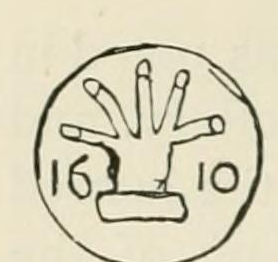
1610
A hand within a circle, dated 16 · 10 · painted in lustre · engraved in the sourceRecorded on a Spanish maiolica dish in rich copper lustre approaching ruby, in Oriental patterns on a drab ground, formerly in Mr Reynold's Collection.Chaffers 1891, p.158
The date is split either side of the hand — 16 to the left, 10 to the right. Chaffers notes the device is engraved 'much reduced in size' from the original.
Plate II🔗
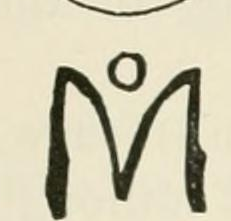
1610–1611
M with a small o above · large lustre letters, with annulets round · engraved in the sourceChaffers 1891, p.158Found on the BACK of the dish above, while the dated hand is on the front. Chaffers records a similar plate carrying the same M° on the back with 1611 on the front — so the two marks work as a pair, front and reverse.
What the source records
- The manufactory was in existence before the sixteenth century.Chaffers 1891 · p.158
- The lustred ware made there was held in great request by the Pope, cardinals and princes.Chaffers 1891 · p.158
- It continued in production, though in a state of dilapidation and decay, down to Chaffers' own day.Chaffers 1891 · p.158
- The later Manises work is characterised by the copper-red tones of its lustres.Chaffers 1891 · p.158
Why this differs from other listings
The Manises marks are split across the piece: a dated device on the front, the M° on the back. Chaffers records two plates with this arrangement, one dated 1610 and one 1611, which means a bare M° on a reverse is only half the mark and the date may still be present on the face.
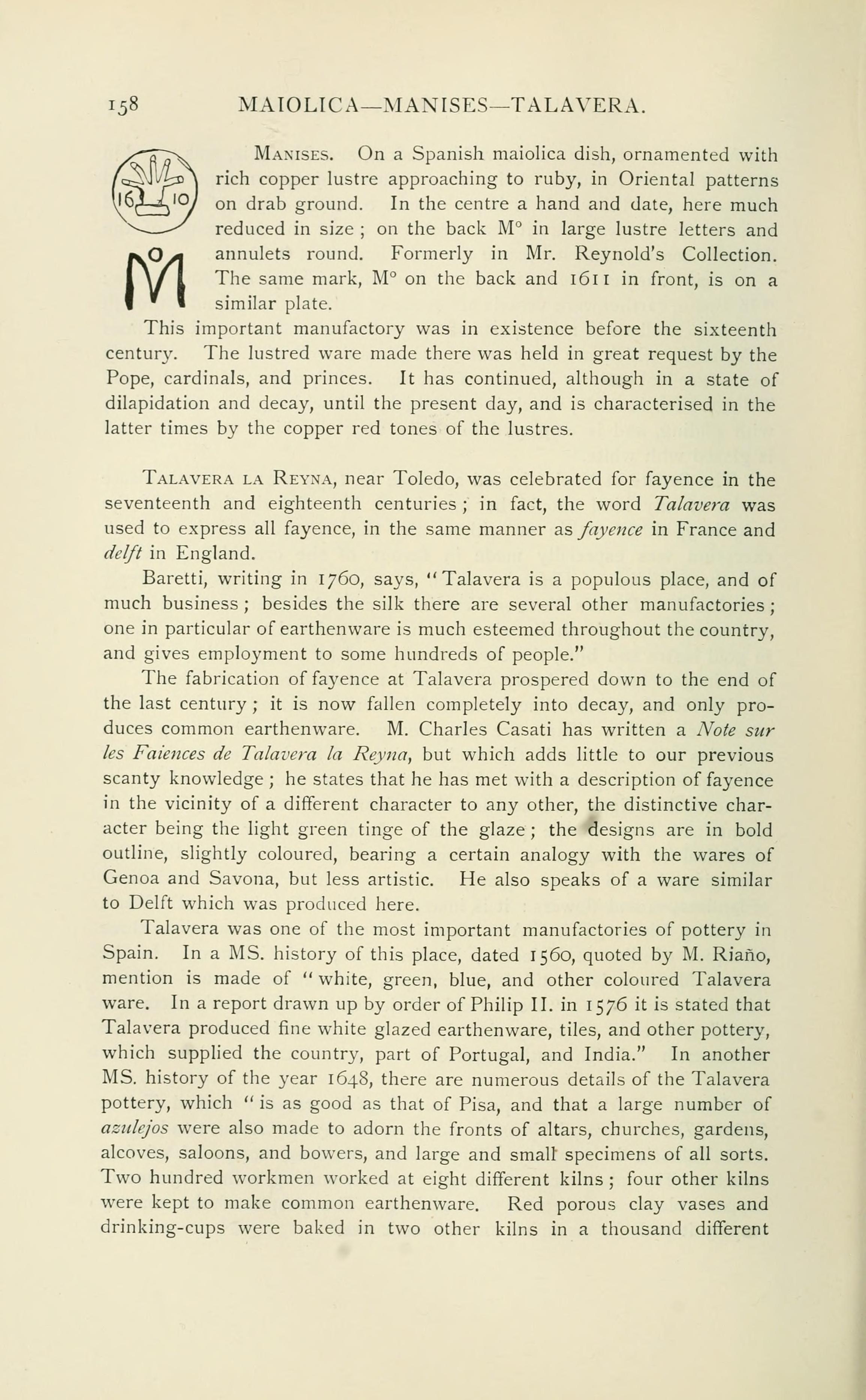
The source page
What this entry does not establish
- Chaffers gives no range for the M° mark beyond the two dated plates he cites.
- 'Before the sixteenth century' is as precise as the source gets on the works' founding.
Questions
What marks does Chaffers 1891 record for Manises?
2 on p.158: A hand within a circle, dated 16 · 10 (1610); M with a small o above (1610–1611). 2 of them are engraved in the source and are reproduced above; the rest are described in words only.
What dates does the source give?
The dates Chaffers attaches to these marks fall between 1610. They are his, not an inference drawn here, and several are given as approximate or open-ended in the original wording shown on each plate.
Where was Manises?
Manises, near Valencia, Spain.
Can this page tell me what my piece is worth?
No. This site reports what one nineteenth-century reference recorded, and cites the page so you can check it. It does not authenticate objects, value them, or offer an opinion on a specific piece.