Frankenthal
Frankenthal, Palatinate (now Bavaria), Germany · Porcelain · also recorded as Hannong, Carl Theodor
Marks
Plate I🔗
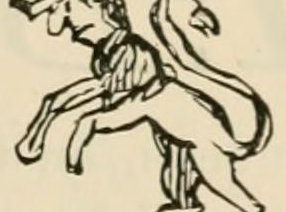
1755–1761
A lion rampant · marked in blue · engraved in the sourceChaffers 1891, p.487The early mark under Hannong. Chaffers identifies the beast precisely — it is the crest of the Palatinate, not a generic heraldic lion — and gives the range 1755–61, which ends exactly where Carl Theodor's purchase begins.
Plate II🔗
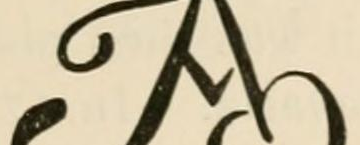
from 1759
JAH in monogram · painted monogram · engraved in the sourceChaffers 1891, p.487Joseph Adam Hannong, who took over from his father in June 1759. Chaffers says it is often found WITH the lion, so the two marks together are not a contradiction.
Plate III🔗
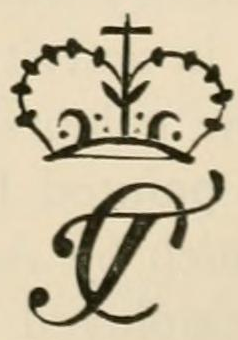
from 1761
CT interlaced beneath the Electoral crown · painted · engraved in the sourceRecorded on a vase and cover with a mythological subject in the South Kensington Museum, which carries both this and the preceding Hannong mark.Chaffers 1891, p.487
The second period, when the works became a Government establishment under Carl Theodor. The South Kensington vase carrying both marks is the evidence that the transition overlapped rather than being clean.
Plate IV🔗
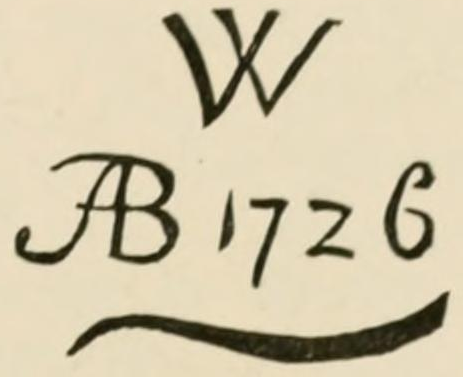
Recorded impressed on the back of the 1775 chronogram plate alongside the painted monogram. Chaffers does not say what the number signifies.
Plate V🔗
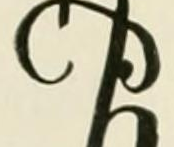
Plate VI🔗
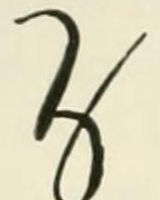
Recorded on a figure in the Collection of the Rev. T. Staniforth.Chaffers 1891, p.488
Plate VII🔗
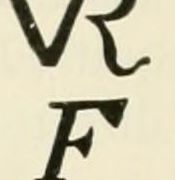
Chaffers gives no reading of the letters, so none is supplied here. He records only that the mark ‘has been attributed to Ringler, but not on good authority’.
Plate VIII🔗
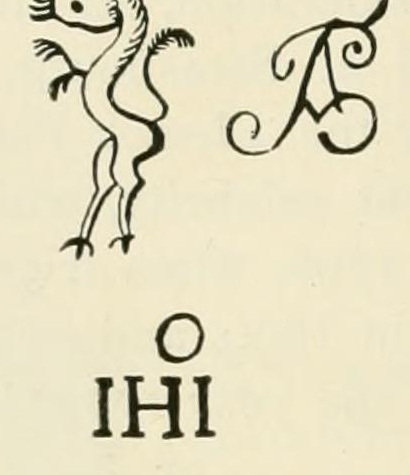
Recorded on a saucer painted with cattle, in the Collection of the Rev. T. Staniforth.Chaffers 1891, p.488
Chaffers calls these ‘these two marks’ and sets the indented letters beneath them. All three elements are reproduced in one plate because the source presents them as one group on one piece; splitting them would assert a separation the source does not make.
Plate IX🔗
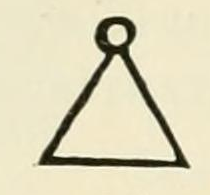
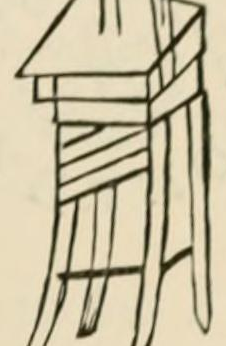
Recorded on a statuette of a man with two faces holding a medallion on which is a nymph pouring water from an urn, beside the Carl Theodor monogram.Chaffers 1891, p.488probably a painter's or modeller's mark, not the factory's
The source's own words are ‘probably a painter's mark, or that of a modeller’.
Plate X🔗
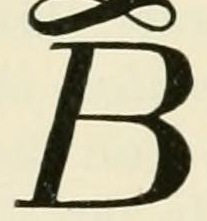
Chaffers records only that ‘this mark is placed by Mr. Marryat as belonging to this manufactory’. He does not endorse it, and the entry does not either.
Plate XI🔗
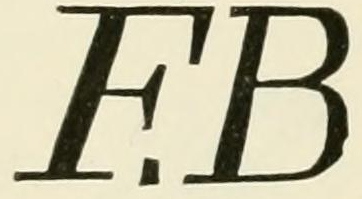
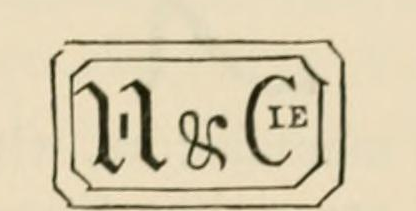
This is the successor works, not Frankenthal. It is shown on this entry because its whole meaning is that Von Recum bought the Frankenthal stock and utensils in 1800 and Bartolo later carried them on — but the heading Chaffers sets over it is GREINSTADT, and that is stated rather than quietly absorbed.
What the source records
- Established in 1754 as a porcelain manufactory by Paul Hannong, making hard paste.Chaffers 1891 · p.487
- Having discovered the secret of hard porcelain, Hannong offered it to the Royal Manufactory at Sèvres; they could not agree on price, the offer was declined, and Chaffers writes that they then commenced persecuting him.Chaffers 1891 · p.487
- A decree of 1754 prohibited the manufacture of translucid ware in France except at Sèvres, compelling Hannong to carry his secret to Frankenthal and leave his Strasbourg fayence works in the charge of his sons.Chaffers 1891 · p.487
- Ringler, who had quitted Höchst in disgust after his secret was divulged, became director.Chaffers 1891 · p.487
- On the marriage of his eldest son Joseph Adam Hannong in June 1759, Paul Hannong gave up all his interest in the Frankenthal fabrique to him for a pecuniary consideration.Chaffers 1891 · p.487
- Paul Hannong died at Strasbourg on 31 May 1760, aged 60.Chaffers 1891 · p.487
- In 1761 the works were purchased by the Elector Palatine Carl Theodor and attained great celebrity under his patronage.Chaffers 1891 · p.487
- The manufactory was maintained until Carl Theodor became Elector of Bavaria in 1798, after which it greatly declined; all stock and utensils were sold in 1800 and removed to Greinstadt.Chaffers 1891 · p.487
- A chronogram on a porcelain plate denotes the year 1775; the plate carries Carl Theodor's initials interlaced and crowned within a gold star of flaming rays, and on the back the usual monogram in blue with 'N. 2.' impressed.Chaffers 1891 · p.487
- A mark scratched under the glaze or pencilled is recorded as the mark of Paul Hannong.Chaffers 1891 · p.488
- A lion rampant and the monogram of Joseph Adam Hannong appear together on a saucer painted with cattle, with the letters beneath indented. — Chaffers quoting the Collection of the Rev. T. StaniforthChaffers 1891 · p.488
- The stock and utensils of the Frankenthal manufactory were purchased in 1800 by M. Von Recum, and the works were recently carried on at Greinstadt by Franz Bartolo.Chaffers 1891 · p.488
- On the death of Carl Theodor the Frankenthal manufactory was abandoned and transferred to Nymphenburg.Chaffers 1891 · p.488
Why this differs from other listings
Frankenthal exists because Sèvres refused to buy Hannong's secret and then had translucid ware banned everywhere else in France. Chaffers gives that whole causal chain, and the marks track it: the Palatinate lion for 1755–61, the son's monogram from 1759, and Carl Theodor's crowned initials from the 1761 purchase. The marks are a political timeline, and dating a piece means knowing which regime it was made under.
The source page
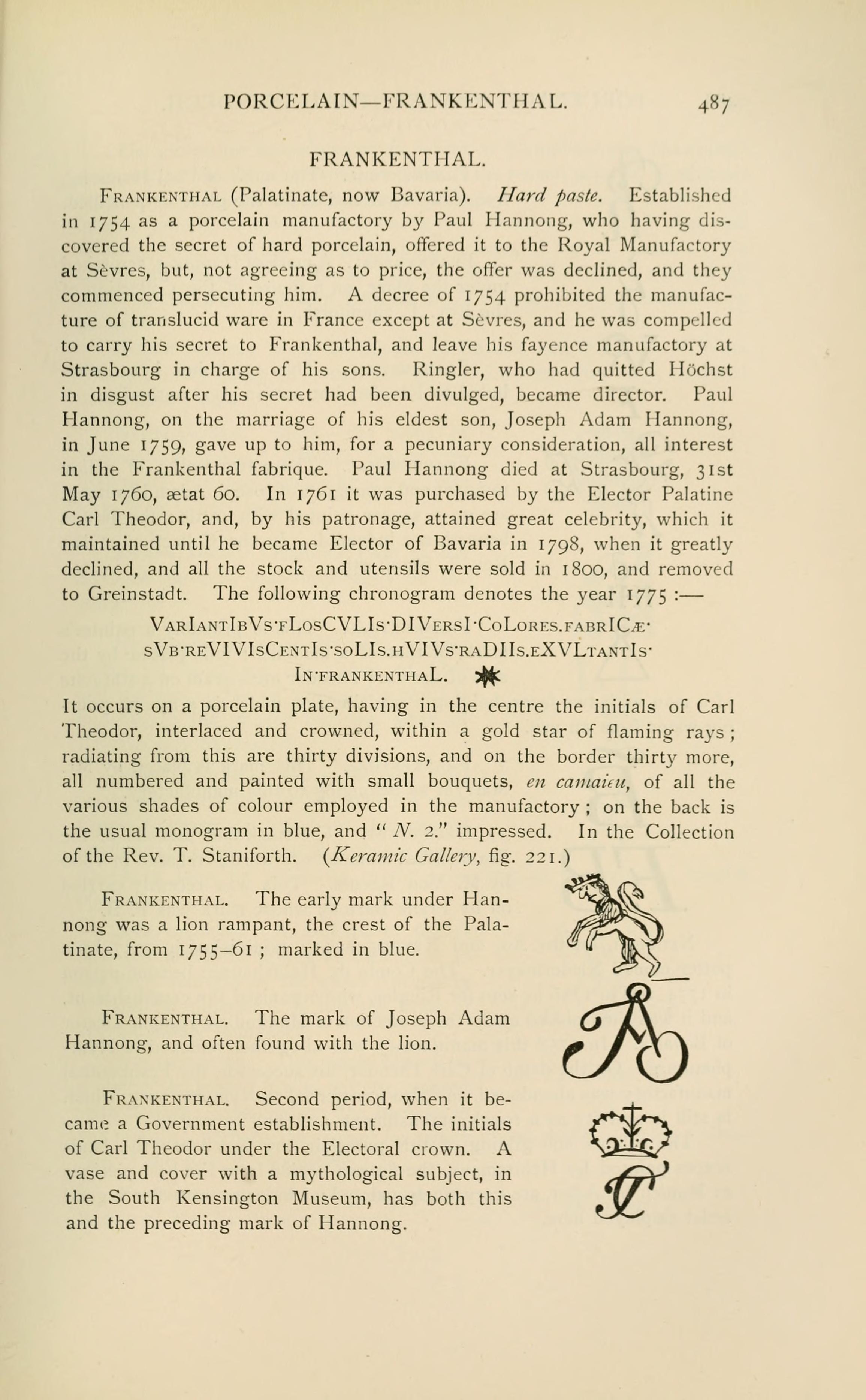
What this entry does not establish
- Chaffers records 'N. 2.' impressed without explaining it; no meaning is asserted here.
- The lion range 1755–61 is the source's; it does not follow that every lion-marked piece falls inside it.
- This entry covers page 487 only. Frankenthal continues on the following page, which is not transcribed.
- That the Ringler mark is Ringler's. The source says the attribution is not on good authority.
- That the B mark is Frankenthal. Chaffers reports it as Marryat's assignment and takes no position.
- Any reading of the letters in the Ringler-attributed mark. The source transcribes none.
Questions
What marks does Chaffers 1891 record for Frankenthal?
11 on p.487: A lion rampant (1755–1761); JAH in monogram (from 1759); CT interlaced beneath the Electoral crown (from 1761); N. 2.; The mark of Paul Hannong, in monogram; A mark of Hannong; A mark attributed to Ringler; A lion rampant with the monogram of Joseph Adam Hannong, and indented letters beneath; A triangle with a circle above; A capital B with a looped flourish above; F. B., the mark of Franz Bartolo at Greinstadt. 10 of them are engraved in the source and are reproduced above; the rest are described in words only.
What dates does the source give?
The dates Chaffers attaches to these marks fall between 1755 and 1761. They are his, not an inference drawn here, and several are given as approximate or open-ended in the original wording shown on each plate.
Where was Frankenthal?
Frankenthal, Palatinate (now Bavaria), Germany. The source also records the name as Hannong, Carl Theodor.
Is the A mark attributed to Ringler attribution certain?
No, and the source says so. Chaffers flags it — attributed to ringler, but not on good authority. Chaffers gives no reading of the letters, so none is supplied here. He records only that the mark ‘has been attributed to Ringler, but not on good authority’.
Can this page tell me what my piece is worth?
No. This site reports what one nineteenth-century reference recorded, and cites the page so you can check it. It does not authenticate objects, value them, or offer an opinion on a specific piece.