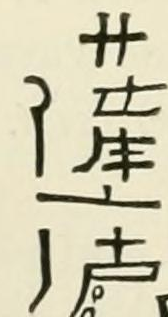
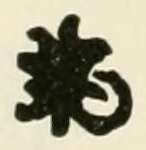
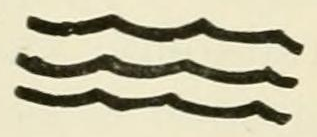
Kutani
Kutani, province of Kanga (Kaga), north-west Nipon, Japan · Porcelain · also recorded as Kutani-Yaki, Kanga, Kaga
Marks
Plate I🔗
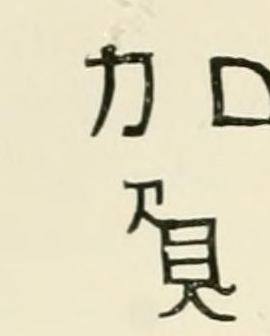
A province mark, not a workshop mark. Chaffers engraves it against the province heading rather than against any individual maker.
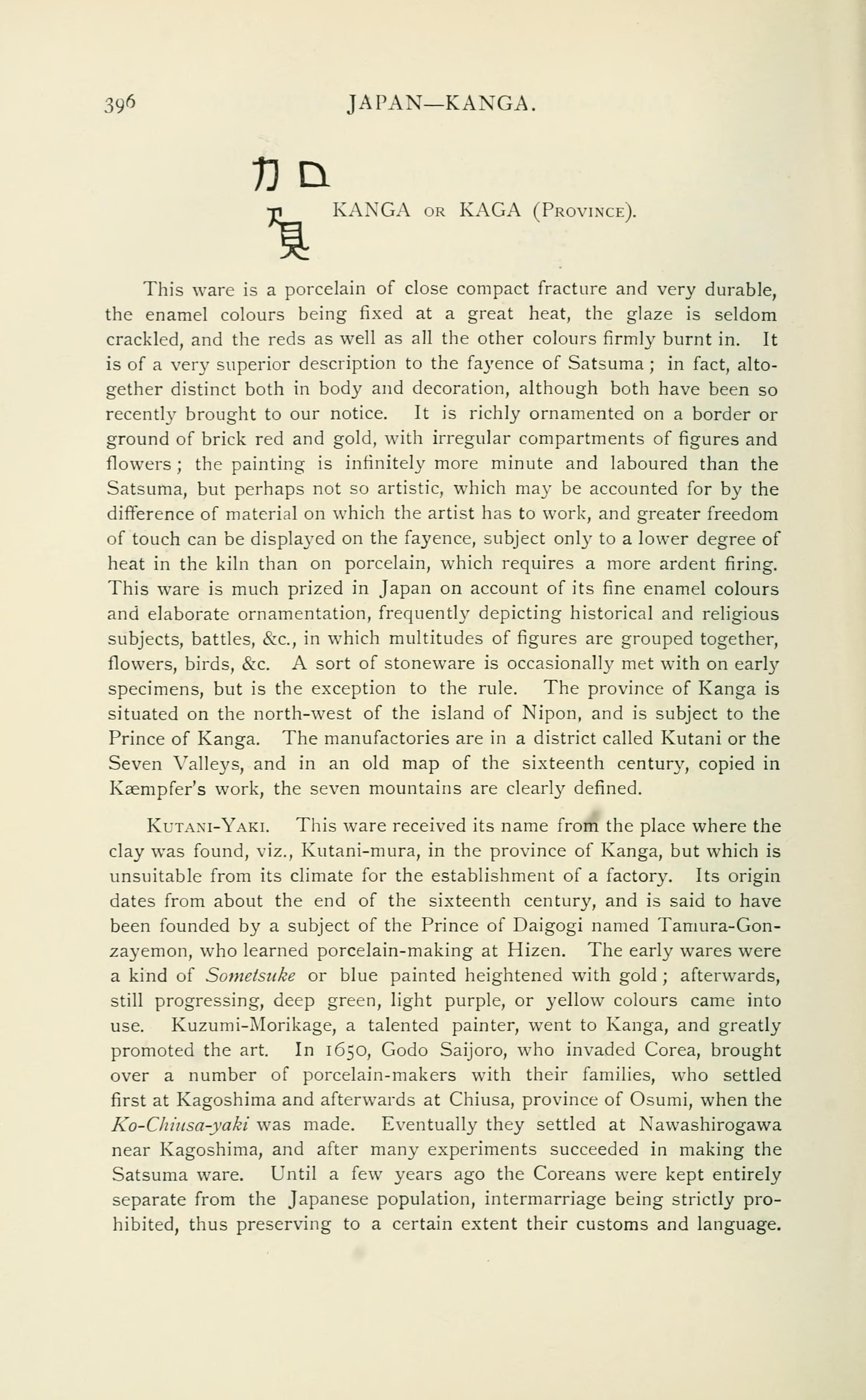
What the source records
- The ware is a porcelain of close compact fracture and very durable, with enamel colours fixed at a great heat; the glaze is seldom crackled and the reds as well as all other colours are firmly burnt in.Chaffers 1891 · p.396
- Chaffers calls it of a very superior description to the fayence of Satsuma, and altogether distinct from it in both body and decoration.Chaffers 1891 · p.396
- It is richly ornamented on a border or ground of brick red and gold, with irregular compartments of figures and flowers.Chaffers 1891 · p.396
- The painting is infinitely more minute and laboured than Satsuma but perhaps not so artistic — which Chaffers attributes to porcelain requiring a more ardent firing, leaving the artist less freedom of touch than fayence allows.Chaffers 1891 · p.396
- The manufactories are in a district called Kutani, or the Seven Valleys; the seven mountains are clearly defined in an old sixteenth-century map copied in Kaempfer's work.Chaffers 1891 · p.396
- The ware takes its name from Kutani-mura, where the clay was found — a place whose climate made it unsuitable for a factory.Chaffers 1891 · p.396
- Its origin dates from about the end of the sixteenth century, and it is said to have been founded by a subject of the Prince of Daigogi named Tamura-Gon-zayemon, who learned porcelain-making at Hizen.Chaffers 1891 · p.396
- The early wares were a kind of Sometsuke, blue painted heightened with gold; deep green, light purple and yellow came into use afterwards.Chaffers 1891 · p.396
- In 1650 Godo Saijoro, who invaded Corea, brought over a number of porcelain-makers with their families, who settled first at Kagoshima, then at Chiusa in Osumi where Ko-Chiusa-yaki was made, and eventually at Nawashirogawa — where they succeeded in making the Satsuma ware.Chaffers 1891 · p.396
Why this differs from other listings
Kutani and Satsuma are constantly confused and Chaffers gives a physical test that separates them: Kutani is porcelain with a compact fracture and a glaze that is seldom crackled, Satsuma is a soft porous fayence covered in minute cracks. He also explains WHY the painting differs — porcelain fires hotter, so the artist has less freedom of touch than on fayence. And the two wares share an origin: the same Corean potters brought over in 1650 ended at Nawashirogawa making Satsuma.
The source page
What this entry does not establish
- The province character says where, not who. Chaffers gives no workshop marks for Kutani on this page.
- The founding attribution to Tamura-Gon-zayemon is given as 'said to have been', and is left at that.
Questions
What marks does Chaffers 1891 record for Kutani?
1 on p.396: The Kanga (Kaga) province character. 1 of them are engraved in the source and are reproduced above; the rest are described in words only.
What dates does the source give?
None. Chaffers dates no mark on this page, so this entry gives no date either.
Where was Kutani?
Kutani, province of Kanga (Kaga), north-west Nipon, Japan. The source also records the name as Kutani-Yaki, Kanga, Kaga.
Can this page tell me what my piece is worth?
No. This site reports what one nineteenth-century reference recorded, and cites the page so you can check it. It does not authenticate objects, value them, or offer an opinion on a specific piece.