Swansea
Swansea, Glamorganshire, Wales · Porcelain And Pottery · also recorded as Dillwyn & Co, Bevington & Co, Cambrian Pottery
- Crossed device
- Trident
- Flower, leaf or feather
- Block capitals
- Inside a frame
- Initials
- Wales
- Porcelain
- Pottery
- 1800–1849
Marks
Plate I🔗

c.1815
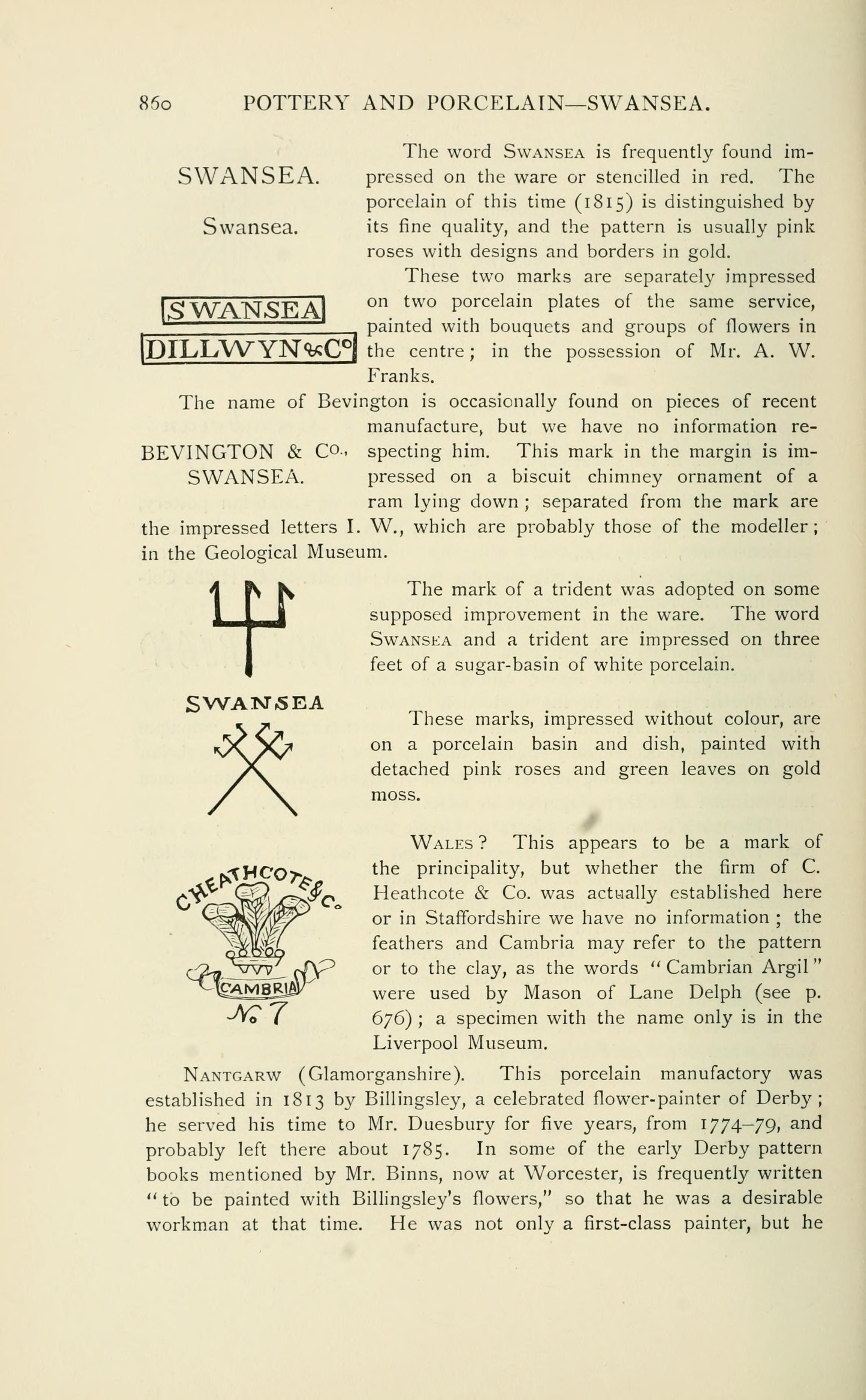
SWANSEA · impressed, or stencilled in red · engraved in the sourceChaffers 1891, p.860The plain name. Chaffers gives it in more than one setting — roman capitals and upper-and-lower — so the letterform alone does not distinguish a period.
Plate II🔗
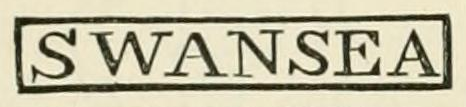
Found on a plate whose companion from the same service carried the DILLWYN & Co mark instead. Two pieces of one service can therefore carry different marks — which is the single most useful fact on this page.
Plate III🔗
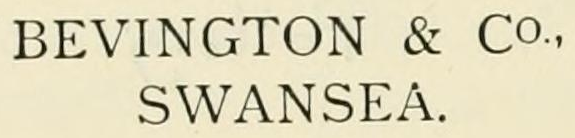
'recent manufacture' as of 1891
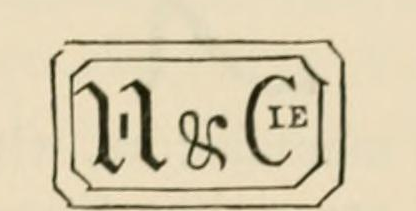
BEVINGTON & Co., SWANSEA · impressed · engraved in the sourceRecorded on a biscuit chimney ornament of a ram lying down, in the Geological Museum.Chaffers 1891, p.860
Chaffers admits he knows nothing about Bevington. The impressed letters I. W. found separately on the same piece are, he suggests, the modeller's.
Plate IV🔗
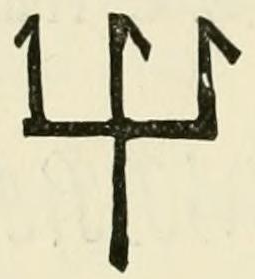
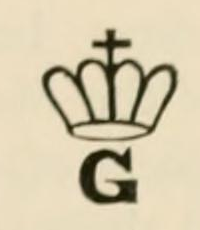
Recorded on three feet of a sugar-basin of white porcelain, alongside the word SWANSEA.Chaffers 1891, p.860
Adopted on some supposed improvement in the ware, so the trident is a claim about quality rather than merely an identifier.
Plate V🔗
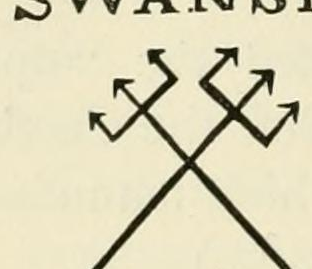
Recorded on a porcelain basin and dish painted with detached pink roses and green leaves on gold moss.Chaffers 1891, p.860
Plate VI🔗
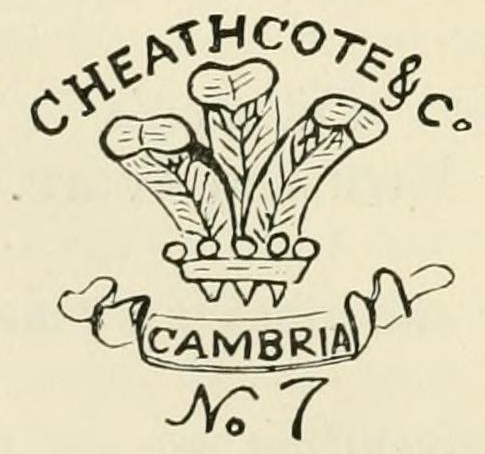
Chaffers heads this one 'WALES?' with the question mark. He says it appears to be a mark of the principality, but that whether C. Heathcote & Co was established in Wales or in Staffordshire he has no information — and that the feathers and 'Cambria' may refer to the pattern or to the clay rather than the place, since 'Cambrian Argil' was used by Mason of Lane Delph.
What the source records
- The word SWANSEA is frequently found impressed on the ware or stencilled in red.Chaffers 1891 · p.860
- The porcelain of 1815 is distinguished by its fine quality; the pattern is usually pink roses with designs and borders in gold.Chaffers 1891 · p.860
- The SWANSEA and DILLWYN & Co marks were found separately impressed on two porcelain plates from the same service, painted with bouquets and groups of flowers in the centre, in the possession of Mr A. W. Franks.Chaffers 1891 · p.860
- The name of Bevington is occasionally found on pieces of recent manufacture; Chaffers says he had no information respecting him.Chaffers 1891 · p.860
- The Bevington mark was recorded impressed on a biscuit chimney ornament of a ram lying down, in the Geological Museum, with the separate impressed letters I. W. — probably those of the modeller.Chaffers 1891 · p.860
- The trident mark was adopted on some supposed improvement in the ware.Chaffers 1891 · p.860
Why this differs from other listings
Two plates from a single Swansea service carried different marks — SWANSEA on one, DILLWYN & Co on the other. That is stated with the collection it was observed in, and it undercuts the usual assumption that one service means one mark. The page also carries a mark Chaffers refuses to place: the Cambria feathers may be a pattern name rather than a Welsh origin.
The source page
What this entry does not establish
- The Cambria / C. Heathcote mark is not established as Welsh. Chaffers puts a question mark on it and this entry keeps it.
- Bevington is undated and unresearched in the source — 'recent manufacture' is relative to 1891.
- Nantgarw, established 1813 by Billingsley, begins on this page and continues beyond it; it is not transcribed here.
Questions
What marks does Chaffers 1891 record for Swansea?
6 on p.860: SWANSEA (c.1815); SWANSEA, in a ruled box; BEVINGTON & Co., SWANSEA ('recent manufacture' as of 1891); A trident; Two crossed tridents; C. HEATHCOTE & Co · feathers · CAMBRIA · No 7. 6 of them are engraved in the source and are reproduced above; the rest are described in words only.
What dates does the source give?
The dates Chaffers attaches to these marks fall between 1815 and 1891. They are his, not an inference drawn here, and several are given as approximate or open-ended in the original wording shown on each plate.
Where was Swansea?
Swansea, Glamorganshire, Wales. The source also records the name as Dillwyn & Co, Bevington & Co, Cambrian Pottery.
Is the C. HEATHCOTE & Co · feathers · CAMBRIA · No 7 attribution certain?
No, and the source says so. Chaffers flags it — disputed by the source. Chaffers heads this one 'WALES?' with the question mark. He says it appears to be a mark of the principality, but that whether C. Heathcote & Co was established in Wales or in Staffordshire he has no information — and that the feathers and 'Cambria' may refer to the pattern or to the clay rather than the place, since 'Cambrian Argil' was used by Mason of Lane Delph.
Can this page tell me what my piece is worth?
No. This site reports what one nineteenth-century reference recorded, and cites the page so you can check it. It does not authenticate objects, value them, or offer an opinion on a specific piece.